Stop Using #FYP: The New Rules of Short-Form Discovery in 2026
Hashtags aren’t driving discovery anymore. Here’s what’s actually working for short-form reach in 2026—from TikTok search optimization to Instagram’s originality signals.

UNUM Staff
Everyday Social Tool
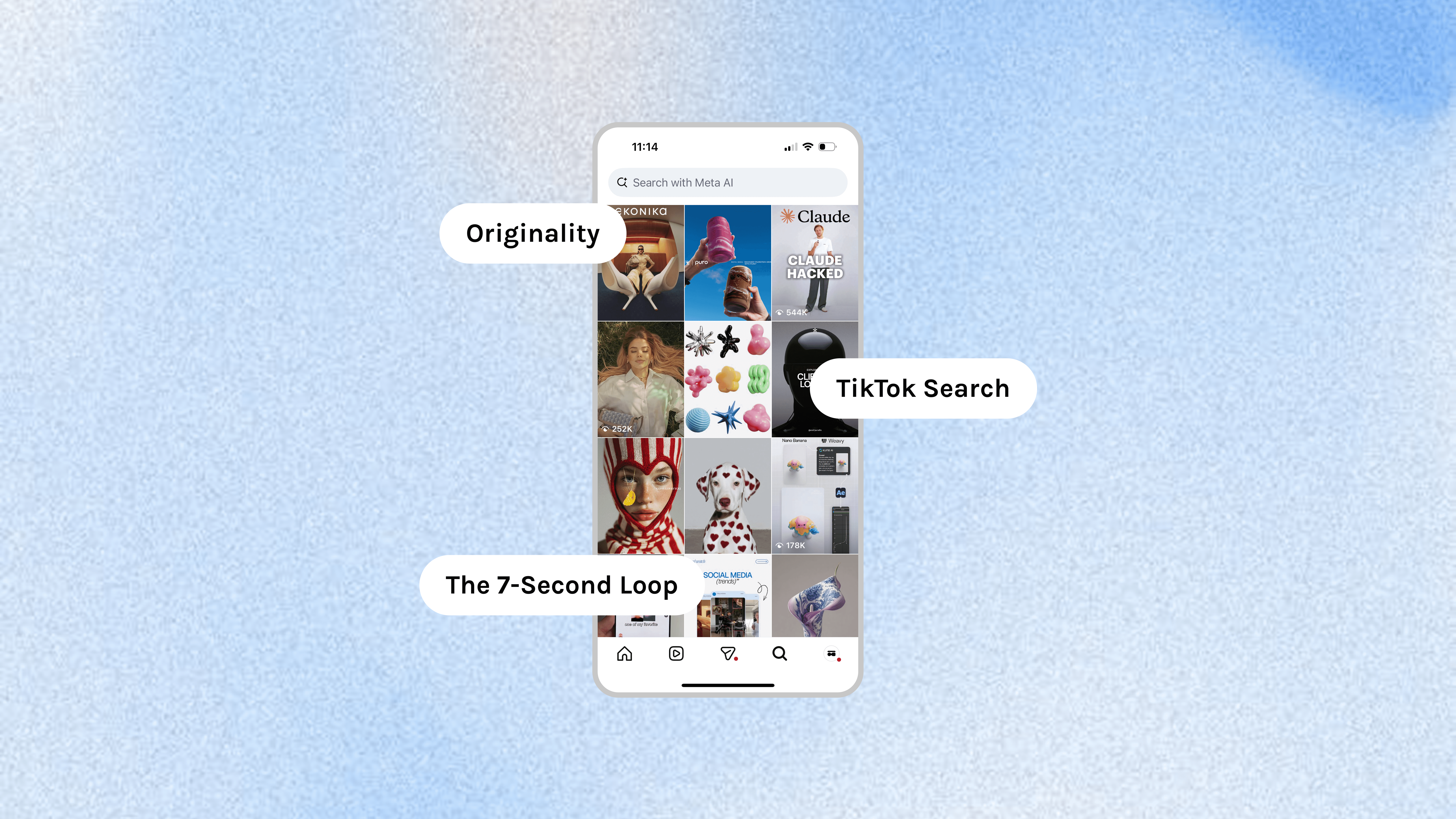
If your social strategy still relies on stacking hashtags like #FYP #ForYou #Viral at the bottom of every caption, you’re essentially shouting into a room that’s already empty. The discovery mechanics on every major short-form platform have fundamentally shifted—and most social media managers haven’t caught up yet.
What’s Actually Driving Reach Now
1. TikTok: Search Is the New Feed
TikTok has been quietly building a search engine inside its app, and in 2026 the shift is impossible to ignore. The platform is now heavily prioritizing videos with searchable keywords in captions and on-screen text over anything tagged with generic hashtags. Think about it: when was the last time you searched “#FYP” to find something? Nobody does. But millions of people are typing “how to plan content for a small business” into TikTok’s search bar every day.
What this means for you: Write your captions like mini search queries.
❌ Instead of “New reel alert! #socialmedia #tips #fyp,”
➡️ try “How to plan a week of social content in 30 minutes.” Front-load the value proposition. The algorithm is reading your text, not just counting your tags.
2. Instagram: Originality Is Being Rewarded (Finally)
Instagram’s algorithm is shifting to reward original content over reshared and aggregated reels. For social media managers running brand accounts, this is actually great news—it means the playing field is leveling. You no longer need to compete with meme aggregators who repost viral content all day. Your original product demos, behind-the-scenes clips, and team content now have a genuine algorithmic advantage.
The move: Audit your content mix. If more than 30% of your reels are reposts, trend-jacks, or stitched content from other creators, you’re working against the algorithm. Original footage—even if it’s rougher—will outperform polished reposts.
3. YouTube Shorts: The Remix Pipeline
YouTube is heavily pushing its Remix feature, which lets creators clip sections of long-form videos into Shorts. This is creating a massive cross-channel discovery pipeline. If you’re managing a brand that produces any long-form content—webinars, podcasts, tutorials—you’re sitting on a goldmine of Shorts material that the algorithm is actively trying to surface.
4. The 7-Second Loop
Across all platforms, 5–9 second videos that loop seamlessly are getting disproportionate reach. The algorithms are reading “replay” metrics as strong engagement signals, and a perfectly looping video racks up replays without the viewer even realizing it. For product-focused brands, this means: one satisfying shot of your product in action, on loop, with a text overlay. That’s it. No intro, no CTA card, no outro.
The Tactical Playbook
Caption structure: Lead with a searchable question or statement. “3 scheduling mistakes killing your Instagram reach” beats “New tips! ✨ #socialmediatips” every time.
On-screen text: Mirror your caption’s keywords in the first frame of your video. TikTok’s OCR is reading this for search indexing.
Content ratio: Aim for 70% original content, 20% trend-adapted (trending audio with your own footage), 10% community engagement (duets, replies).
Loop test: Before posting any video under 10 seconds, watch it on loop 3 times. If the transition from end to start is jarring, trim it. Smooth loops = inflated watch time = more reach.
The Bottom Line
Discovery in 2026 is about intent, not volume. The platforms are getting smarter at matching content to what people are actually looking for—which means your job as a social media manager is shifting from “how do I game the algorithm” to “how do I answer the question my audience is already asking.” That’s a much better game to play.
Read more

Join our Newsletter
Sign up to our newsletter for all things marketing.